How to Get Real Estate Leads from Senior Communities (55+) in 2026
May 18, 2026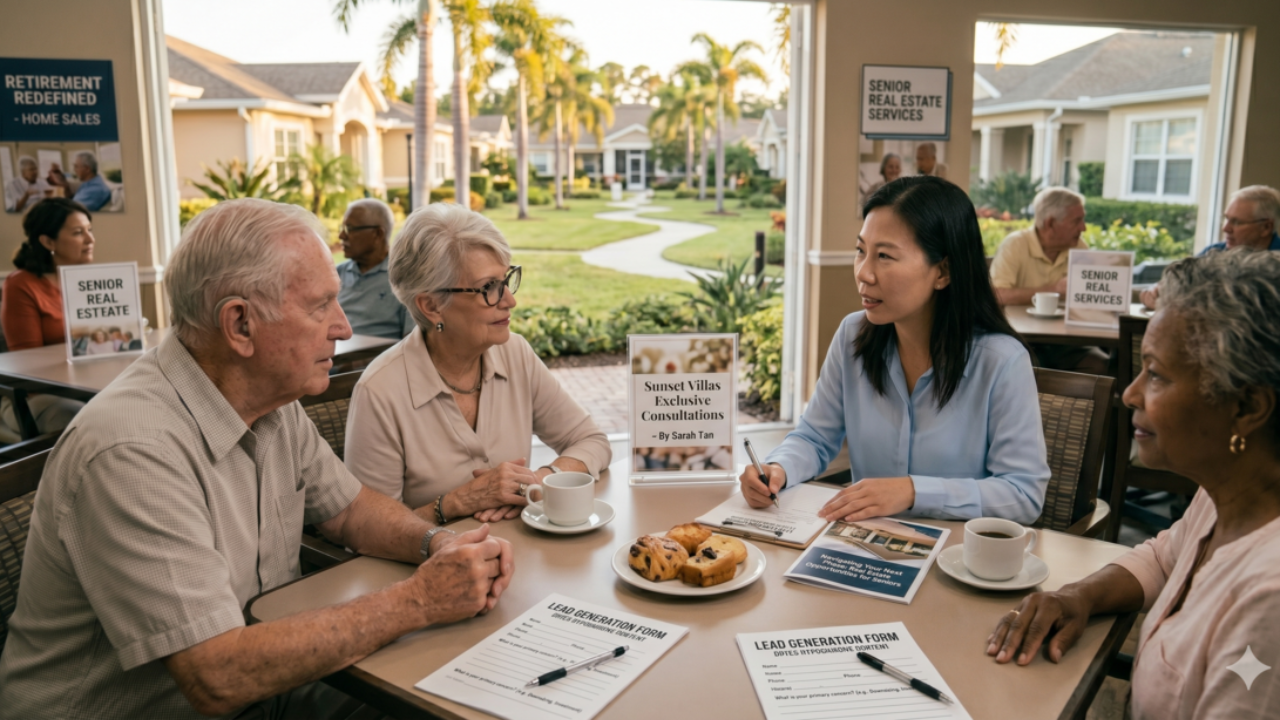
Senior communities are one of the most durable and misunderstood farms in real estate. The adults moving in and out of 55 and over neighborhoods are not chasing trends. They move for real, recurring reasons: they want less house, fewer stairs, lower maintenance, and to be closer to the people they love. That steady, human demand is exactly what makes this niche worth building a career around, and it is why a focused system beats a lucky streak. If you want that kind of system rather than a scramble, this playbook pairs well with structured real estate coaching.
This guide is honest and relationship first. It shows you how to earn trust inside 55 and over communities, how to stay fully compliant with fair housing law, and how to turn patience into a predictable stream of listings and referrals. Everything here is framed around serving older clients and their families well, never around targeting or excluding anyone. If you commit to it, this can become the most reliable source of business you will ever build.
Quick Answer
To get real estate leads from senior communities in 2026, build genuine expertise in downsizing and later life moves, lead with value instead of soliciting, and partner with the professionals seniors already trust. Adults aged 61 to 79 now make up 42% of buyers and 55% of sellers, so the demand is real and steady. Win by hosting workshops, respecting community rules and fair housing law, nurturing referral partners like estate attorneys and move managers, and staying patient across a 6 to 18 month horizon. Serve people well and the listings follow.
In This Guide
Why senior communities are the best farm in 2026
Here is the simple case for this niche. According to the 2026 NAR Home Buyers and Sellers Generational Trends Report, buyers aged 61 to 79 now account for 42% of all home buyers, and that same group makes up 55% of all home sellers. Read that again. More than half of the sellers in the country are older adults. If you want listings, this is where the listings live.
Younger agents often overlook this market because it looks slow. It is not slow. It is steady. Older homeowners move for reasons that do not depend on interest rates or the news cycle: a spouse passes, the stairs get harder, the yard becomes a burden, or the grandkids move two states away. That demand shows up every single year in every market in the country.
It is also a market built on trust rather than flash. You cannot buy your way in with the loudest ad. You earn your way in by being useful, patient, and genuinely good at helping people through a hard transition. That is why the agents who commit to it tend to own it for a decade or more, while everyone else keeps chasing whatever lead source is trendy this quarter.
And because the demand is demographic rather than cyclical, it holds up when the wider market cools. When rates rise and move up buyers freeze, the older homeowner whose health has changed still needs to move. That resilience is rare, and it is worth a lot to a business that has to eat every month.
Compare that to the lead sources most agents lean on. Portal leads are expensive and shared with three other agents. Cold calling burns goodwill and hours. Paid ads stop working the moment you stop paying. A senior community farm is the opposite: the cost is mostly time and care, the relationships belong to you, and the referrals keep coming long after the first closing. Few strategies compound this quietly and this reliably, and almost none of them do it while making you the kind of agent people are glad to recommend.
Fair Housing First
You are allowed to market your services to older adults and to specialize in serving them. You are never allowed to discriminate against or exclude protected classes. Throughout this guide, every tactic is about serving clients well, not steering anyone toward or away from a home.
The numbers: what the 2026 data says about 55+ movers
The 2026 NAR Home Buyers and Sellers Generational Trends Report gives you a clear picture of how older boomers move. The patterns are consistent enough to plan a business around, so it is worth knowing them cold. Here is the short version.
| What the 2026 data shows | Older boomers (71 to 79) | Younger boomers (61 to 70) |
|---|---|---|
| Bought specifically to downsize | 16% | 11% |
| Chose a senior related community | 23% | 13% |
| Paid all cash | 46% | 39% |
A few things jump out. Downsizing is real, but it is not everyone. Among older boomers aged 71 to 79, 16% bought specifically to downsize, compared with 11% of younger boomers aged 61 to 70. Roughly 23% of older boomers and 13% of younger boomers chose a senior related community, which tells you the 55 and over segment is a meaningful slice, not the whole story. Plenty of these movers buy an ordinary home in an ordinary neighborhood, so do not narrow your service too far.
Cash is a big deal in this group. About 46% of older boomers and 39% of younger boomers paid all cash. That changes how you talk about timelines and contingencies, and it makes these sellers strong buyers too when they turn around and purchase their next place. Proximity to friends and family is a top motivator, cited by about 31% of older boomers, which is why so many of these moves are really about getting closer to the people they love. When you understand the why, your conversations stop sounding like sales and start sounding like help.
Use these numbers to position yourself, not to pigeonhole anyone. Because so many older sellers pay cash on their next purchase, you can speak confidently about clean, contingency light offers when they buy. Because family proximity drives so many moves, your questions should center on where their people are, not only on square footage and price. Data like this is most useful as a way to ask better questions and prepare better, never as a way to assume what any individual in front of you actually wants.
The 4 types of senior communities and which to target
Not every senior community is a good farm, and they are not interchangeable. Knowing the four main types tells you where your time actually converts into listings and where it mostly builds goodwill for the long haul.
1. Active adult 55 and over communities
These are age qualified neighborhoods of homes, townhomes, or condos where residents own their property and live independently. Turnover is steady and the residents are the sellers, which makes this the single best category for listing generation. This is where most agents should focus first.
2. Independent living communities
Here residents rent apartments or cottages and pay for services like meals and housekeeping. There is usually no home to list when someone moves in, but the move itself often creates a listing, because the person is selling the house they are leaving. Your opportunity is upstream, at the family home.
3. CCRCs and continuing care communities
Continuing care retirement communities offer a spectrum from independent living to assisted living and skilled nursing on one campus. Like independent living, the listing is usually the home the resident is leaving, and the decision often involves adult children and advisors. Relationships with the community staff and with families matter most here.
4. Aging in place neighborhoods
These are ordinary neighborhoods with a high share of long time older homeowners who intend to stay put until they cannot. Turnover is slower and less predictable, but the homes are often owned free and clear with decades of equity, so the eventual listings are large. This is a long game farm that rewards patience.
| Community type | Where the listing is | Target priority |
|---|---|---|
| Active adult 55 and over | The resident's own home | High |
| Independent living | The home they are leaving | Medium to high |
| CCRC and continuing care | The home they are leaving | Medium |
| Aging in place neighborhood | The long held family home | Long game |
If you are choosing where to start, begin with an active adult 55 and over community you can visit regularly, then add an aging in place neighborhood nearby for the long term. That pairing gives you steadier near term listings from the active adult community while the aging in place farm matures into larger paydays over the years. You do not have to pick only one, but you should be honest with yourself about how much consistent attention you can truly give before you commit.
How to get in without breaking the rules
This is where most agents get it wrong. They treat a senior community like a target to be hit with door knocking and cold flyers. That approach gets you banned from the clubhouse and, worse, it can cross fair housing lines if it starts to look like steering. There is a better way, and it happens to be more effective too.
The rule of thumb is simple: lead with value, get invited, and follow every community policy to the letter. Read the solicitation rules before you do anything. Many communities strictly prohibit door to door sales and unsolicited flyers, and violating those rules is the fastest way to lose access permanently.
Here is what value first access looks like in practice.
- Offer a genuinely useful downsizing workshop or a document organizing seminar, coordinated through the activities director.
- Sponsor an existing community event, a newsletter, or a resident club rather than pushing your own ad.
- Partner with a trusted vendor the community already works with, so you arrive with a warm introduction.
- Ask happy past clients who live there to introduce you, because a resident's word opens doors a stranger never could.
- Volunteer your expertise at a residents' association meeting on topics like preparing a home for sale later in life.
Whatever you do, get permission in writing and keep it. Ask management exactly what is allowed, confirm it by email, and honor the limits without ever pushing them. Communities remember the agent who respected the rules, and they remember the one who did not even longer. When in doubt, ask first and assume the answer is no until someone with real authority tells you yes. That patience is not weakness. It is how you keep access for years instead of weeks.
The Compliance Line
Market your services broadly and serve each client well. Never make housing decisions for people, never steer, and never exclude or target anyone based on a protected class. Serving seniors well is legal and good. Discriminating is illegal and wrong. Keep that distinction crystal clear in everything you produce.

Lead channels that actually work here
Once you have earned access, a handful of channels do the heavy lifting. None of them are gimmicks. They all come back to consistency and trust, applied patiently over time.
Referral partners are the top channel, and they get their own section below because they matter that much. Beyond partners, three channels consistently produce in a 55 and over community.
Direct mail that respects the reader
Older homeowners still read their mail, which makes thoughtful print one of the most reliable ways to stay top of mind in a 55 and over community. Skip the pushy just listed postcard blast and send genuinely useful pieces: a downsizing checklist, a market update specific to their neighborhood, or an invitation to a workshop. If you want the mechanics of doing this well, study my full guide to direct mail for real estate agents and apply it with a senior friendly tone and larger, readable type.
Community events and workshops
Live events are where trust gets built fast. A downsizing workshop, a shredding and document day, a lunch and learn on the selling process, or a sponsored coffee morning lets people meet you as a helpful expert rather than a salesperson. Show up, teach, and leave the hard pitch at home. The relationships you form in the room are the whole point.
Consistent, patient follow up
Most senior listings are not won on the first conversation. A light, respectful follow up rhythm, a quarterly note, a birthday card, a market update, keeps you in mind for the day the decision becomes real. Systematize it so no one falls through the cracks, and keep it warm rather than salesy.
One more thing about channels: pick two or three and run them consistently rather than dabbling in all of them at once. A single workshop each quarter, a steady mail piece, and a real follow up habit will beat a scattered mix of half finished ideas every time. Consistency is the channel that makes every other channel work, and it is the one most agents quietly abandon right before it would have paid off.
Referral partnerships that feed senior listings
If you build only one thing in this niche, build a network of referral partners who meet older homeowners at the exact moment a move becomes real. These partners are the difference between chasing leads and having them delivered to you.
The strongest partners are the professionals seniors already trust with major decisions.
- Estate and elder law attorneys guide families through wills, trusts, and transitions, and they are often the first to know a home will sell.
- Senior move managers physically help people downsize and relocate, so they are involved before the home ever hits the market.
- Financial advisors and CPAs run the numbers on retirement and often surface the decision to sell in the first place.
- Senior living placement agents help families choose a community and know precisely when a home needs to be sold to fund the move.
When you approach a partner, do not open with what you need. Open with how you can make their life easier: a reliable pro they can hand clients to without worry, a co hosted workshop that makes them look generous, or a stream of well prepared sellers who value their advice. The agents who win these relationships are the ones who give first, deliver every time, and keep score quietly instead of demanding a return.
The key is that these must be two way relationships. Send business back, make your partners look good to their clients, and treat every referral as a trust deposit. A structured approach beats a random ask, so build this deliberately using a real real estate referral strategy rather than hoping partners simply remember you exist.
One adjacent source deserves special mention. When an older homeowner passes away, the family often needs to sell, and that process runs through the courts. Handled with genuine compassion and zero pressure, this can be a meaningful and ethical source of listings. My guide on how to get real estate listings from probate leads walks through doing it the right way, with the family's grief kept front of mind at every step.
Farming a 55 and over community the right way
Farming a senior community is geographic farming with a relationship first twist. The fundamentals are the same as any farm: pick an area, commit for the long haul, and become the obvious local expert through consistent, useful contact. If you are new to the concept, start with my complete guide to real estate farming and the deeper explainer on what is geographic farming in real estate, then layer the senior specific approach on top.
The senior twist is that touchpoints must be genuinely helpful and human, not just branded. A market update is fine, but a downsizing resource, a trusted vendor list, or a workshop invitation lands far better. Frequency matters, but tone matters more. Be the calm, competent neighbor, not the pushy agent who only appears when there is a commission in sight.
Pick a farm you can realistically own. One or two well chosen 55 and over communities of a few hundred homes each is plenty for most agents. Depth beats breadth here. Being genuinely known in one community will outproduce being a stranger in ten, and the word of mouth inside a tight community compounds faster than you expect.
Then measure like a farmer, not a gambler. You are planting now for a harvest that comes over quarters and years. Track your consistency and your relationships rather than your monthly closings, and trust the demographic math that this article's data supports. The seeds are real. They just sprout on the resident's schedule.
A workable cadence looks like this: a useful mailed piece every quarter, one live event or sponsorship each quarter, a personal note or call to your warmest contacts monthly, and an immediate, genuine thank you whenever someone refers you. None of it is fancy, and none of it requires a big budget. All of it repeats the same quiet message over and over: I am here, I am useful, and I am not going anywhere. That message is what earns the call when the day finally comes.
Is the SRES designation worth it?
The Seniors Real Estate Specialist, or SRES, designation from the National Association of Realtors is training focused on the financial, emotional, and lifestyle sides of helping clients over 50. The honest answer on whether it is worth it: it depends on what you expect from it.
What the SRES does well is shorten your learning curve. It covers reverse mortgages, retirement account basics, downsizing dynamics, and the emotional realities of a later life move. That knowledge builds real confidence, and it can prevent rookie mistakes with high stakes clients who cannot afford for you to guess.
What the SRES does not do is hand you leads. The designation is a credential, not a pipeline. It looks good on your marketing and it signals commitment to this client base, but no one is going to hire you just because of the letters after your name. The listings still come from trust, service, and referral partners.
My take: if you are serious about this niche, the designation is a reasonable investment for the knowledge and the credibility, especially early on. Just do not expect it to replace the patient relationship work that actually generates business. The letters open a few doors. Your reputation opens the rest.

What to say, and never say, to senior sellers
How you communicate matters more in this niche than in any other. You are often helping someone leave a home filled with decades of memories, and the whole family may be watching how you treat them. Get the human part right and the business tends to take care of itself.
Lead with patience and respect. Slow down, listen more than you talk, and let silences sit. Many older sellers process decisions at a different pace, and rushing them reads as disrespect. Involve the family when the client wants them involved, and never talk over the person whose home it is.
Acknowledge the emotional weight. Leaving a long time home is a loss, not just a transaction. A simple line like, this is a big decision and there is no rush, builds more trust than any closing technique you were ever taught.
Things worth saying
- Take all the time you need. My job is to make this easier, not faster.
- Who else would you like involved in this decision?
- Let us go at your pace, and I will explain every step before we take it.
- What matters most to you about where you go next?
Things to never say
- You need to decide today or you will miss the market.
- This is easy, just sign here and we are done.
- Anything dismissive of memories, belongings, or the family's input.
- Any promise about price or timing that you cannot actually back up.
Adult children deserve special care in these conversations. They are often anxious, protective, and short on time, and they may quietly test you before they decide to trust you. Answer their questions patiently, keep them informed without going around their parent, and never lose sight of whose decision it ultimately is. Win the family's confidence and you frequently earn their business too, in their own neighborhoods, for years to come. The way you treat someone's mother is the best listing presentation you will ever give.
Estimate your opportunity: the interactive
Before you commit a year to a farm, it helps to see the math. This estimator turns your assumptions about a 55 and over community into a rough annual listing and income picture. Treat the output as a planning tool, not a promise, and read the note about timing at the bottom.
Interactive Tool
Downsizing Listing Opportunity Estimator
Enter numbers that match your market, then estimate the yearly listings and income a senior farm could produce. Every field must be greater than 0.
Tracking ROI and staying patient
The number one reason agents fail in this niche is not strategy. It is quitting too early. Senior farming rewards patience, so you have to measure it in a way that keeps you going through the quiet stretch when nothing seems to be happening.
Expect a 6 to 18 month horizon before the pipeline matures. In the first few months you will feel like nothing is happening. That is normal. You are building trust and planting seeds that sprout on the seller's timeline, not yours, and the early silence is not failure.
Track leading activities, not just closings. Count workshops hosted, partner meetings held, personal follow ups sent, and relationships deepened. Those inputs predict the listings that show up quarters later, and they are things you actually control this week.
The Patience Payoff
Much of the long term return in senior farming is not the first listing at all. It is the referrals and repeat business that follow once a family trusts you. Serve one household well and you often earn the next three without spending another dollar on marketing.
Keep the scoreboard simple enough that you will actually use it. A single sheet with four columns, contacts made, events held, partners nurtured, and appointments set, is plenty to steer by. Review it monthly, look for the trend rather than the day to day noise, and let yourself feel good about consistent inputs even in the months when no closing appears. That quiet discipline is exactly what carries you through to the harvest that everyone else quits before reaching.
Finally, protect your energy by expecting the timeline. Agents who know the harvest is a year out keep showing up. Agents who expect instant results burn out and blame the niche. The niche is fine. The expectations were the problem.
Mistakes that get you banned from the clubhouse
Access to a senior community is a privilege that can vanish in a single afternoon. A few avoidable mistakes will get you barred, and a bad reputation travels fast in a tight community where everyone talks. Steer clear of these.
- Ignoring the solicitation rules. Door knocking or dropping flyers where they are banned is the quickest way out.
- Pushing for a fast decision. Pressure reads as predatory with older clients, and word spreads almost immediately.
- Cutting out the family. Leaving adult children out when the client wants them involved destroys trust fast.
- Anything that looks like steering. Making assumptions about where someone should live based on who they are is both wrong and illegal.
- Over promising on price to win the listing. Older sellers talk to each other, and a broken promise ends your access.
- Treating people as transactions. If residents sense you only want the commission, you are quietly done in that community.
Avoiding these is mostly about mindset. If you genuinely lead with service, most of these problems never come up in the first place. If you need help rebuilding your approach around service and repeatable systems, that is exactly the kind of thing structured real estate coaching for agents is built to fix.

Your 30-day launch plan
Here is a simple, honest way to start in the next 30 days without breaking any rules or overspending. The goal this month is not listings. It is access, relationships, and a system you can run for years.
- Days 1 to 7, choose and study your farm. Pick one or two 55 and over communities you can realistically own. Read their solicitation and event policies front to back, and note who the activities director and residents' association leaders are.
- Days 8 to 14, build your partner list. Identify three to five referral partners to approach: an estate attorney, a senior move manager, a financial advisor, and a placement agent. Draft how you will help them, not just what you want from them.
- Days 15 to 21, create one genuinely useful asset. Build a downsizing checklist or a simple workshop outline. Make it senior friendly with large type and plain language, and get it approved through the proper channel.
- Days 22 to 30, get invited and show up. Book your first workshop or sponsorship, meet two partners in person, and set up a simple follow up system so no relationship goes cold. Then commit to repeating it every month.
Do that for a year and you will not have a campaign. You will have a farm that feeds you listings and referrals for the rest of your career, built on trust that no competitor can buy overnight.
Frequently asked questions
Is it legal to market real estate to seniors and 55 and over communities?
Yes. You are allowed to build expertise, market your services, and specialize in serving older adults. Fair housing law prohibits discriminating against or excluding protected classes. The line is simple: market your value broadly and serve every client well, and never steer, exclude, or make housing decisions for people based on who they are.
Do I need the SRES designation to work with senior sellers?
No, the SRES designation is not required. It can shorten your learning curve on downsizing, retirement housing, and the financial and emotional side of a later life move, and the marketing support can help. What matters far more is real patience, trustworthy referral partners, and a track record of treating older clients and their families with respect.
How do I get into a 55 and over community that bans solicitation?
You lead with value instead of soliciting. Offer a free downsizing workshop, sponsor a community event, partner with the activities director, or get introduced by a resident who already trusts you. Read and follow the community rules, get permission in writing, and never go door to door. Being invited beats being tolerated, and it protects your reputation.
How long does it take for senior community farming to produce listings?
Plan for a 6 to 18 month horizon before the pipeline matures. Older sellers move on their own timeline, and the decision to leave a long-time home is emotional and often involves family. Show up consistently, stay useful, and track leading activities rather than obsessing over this month's closings. The compounding referrals are where the real return lives.
Who are the best referral partners for senior listings?
Estate and elder law attorneys, senior move managers, financial advisors and CPAs, and senior living placement agents are the strongest partners. They meet older homeowners at the exact moment a move becomes real, and a two way relationship where you send business back is far more durable than a one way ask.
What is the biggest mistake agents make with senior clients?
Rushing. Pushing for a fast decision, talking over the client, or leaving family out of the conversation destroys trust quickly and can get you barred from a community. The agents who win here move at the client's pace, involve the people the client trusts, and treat the sale of a long-time home as the major life event that it is.
About the Author
Written by Saad Jamil, founder of Jamil Academy and a currently producing Top 1% Realtor in Northern Virginia, with $500M+ in career sales and 800+ homes closed. Licensed since 2007 in VA, DC, MD, and WV, Saad has won listings from 55+ and senior communities across Northern Virginia using the relationship-first system described here. View Saad’s Zillow profile.
Educational content only, not legal or financial advice. Follow all fair housing laws and community rules; never target or exclude protected classes. Statistics are from the sources named and may change.
Free: 5 Ways to Get More Listings Without Cold Calling
Five lead strategies that work without cold calls or ad spend, from an agent with $500M sold and 900+ homes closed.
No spam. Unsubscribe any time.
Your Coach