Drive for Listings 2026 | Win Vacant Home Sellers
May 18, 2026
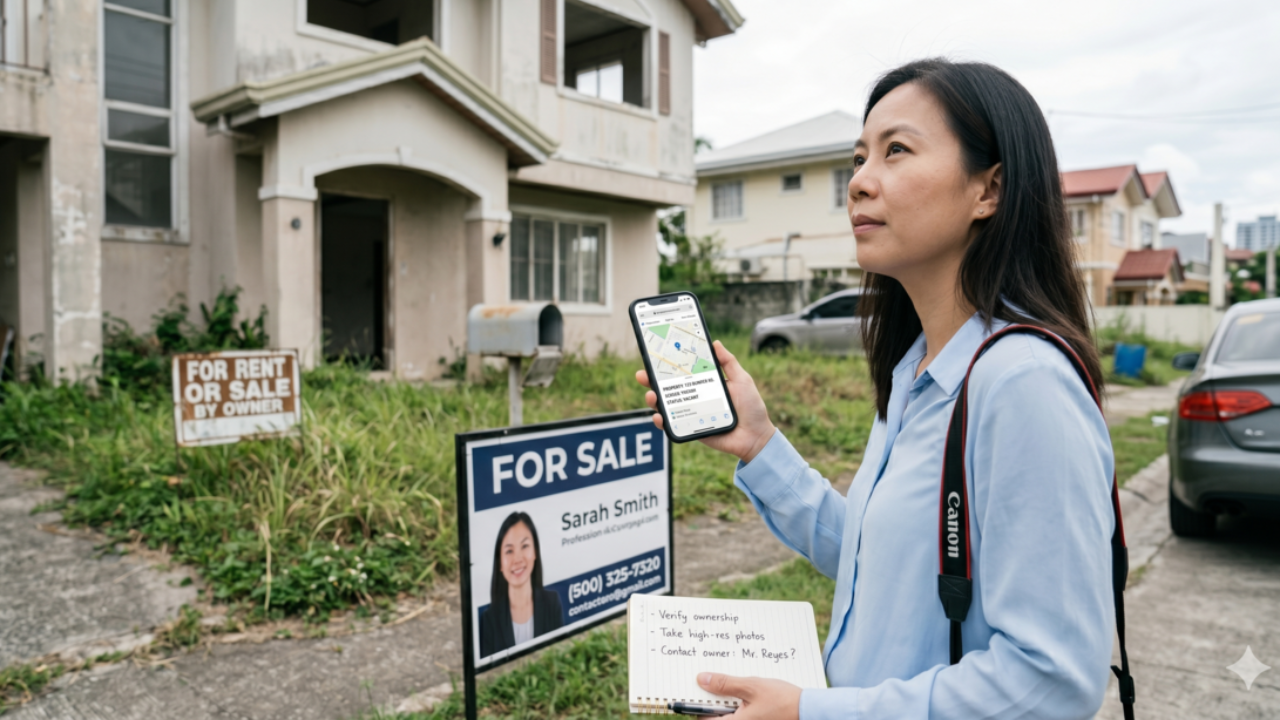
There is a brick rambler in one of my farm neighborhoods that sat empty for almost two years. Brown lawn. Three newspapers rotting on the porch. Mail wedged so tight the box would not close. Every agent in the area drove past it a thousand times and saw nothing. I pulled the parcel record, found the owner had moved to Arizona, mailed her twice, then called. She had no idea the house had gained $180,000 in equity. That listing closed at $760,000, and the only thing I did differently was actually stop the car.
Every agent I coach is hunting for listings in the same three places: their sphere, expired listings, and Zillow. So is every other agent in their market. Meanwhile they drive past a dozen future listings every single day and never see them, because nobody taught them to look. I am Saad Jamil, founder of Jamil Academy, with $500M and 800+ homes closed in Northern Virginia, and I still sell today. This guide breaks down exactly how I turn vacant and absentee-owned homes into signed listings, and it is the same system I teach inside my real estate coaching programs. You can launch it this week.
Quick Answer
Driving for listings is the agent version of driving for dollars. You physically drive target neighborhoods, spot vacant or distressed homes, identify the owner through public records, and contact them first with a free valuation instead of a discount offer. Because the owner is paying to hold an empty house, motivation is already high, so these convert into listings faster and cheaper than almost any other source. Below is how to spot them, find the owner, what to say, and a 90-day system to run it.
In This Guide
Why vacant homes convert better than a cold farm
How to spot a vacant or absentee home
How to find vacant homes without driving
How to find the owner of a vacant house
The 4-touch outreach sequence (with scripts)
How to plan profitable driving routes
Apps and tools that do the heavy lifting
The 90-day drive-for-listings system
7 mistakes that kill this strategy
Frequently asked questions

What is driving for listings?
Investors invented this tactic to find flip deals. They drive neighborhoods, tag beat-up houses, skip-trace the owners, and mail offers far below market. It works for them because distressed owners take discounts to make the problem go away.
Here is what almost no agent realizes: you are chasing the exact same houses, you just have a better offer. The investor says, I will take this headache for 70 cents on the dollar. You say, I will get you full market value and you walk away with the equity. Same lead, wildly different outcome for the seller. The agent who reaches that owner first and frames it as a listing conversation wins almost every time.
The other half of this is absentee owners. An absentee owner holds a property but lives somewhere else: a landlord, an out-of-state heir, a snowbird. Their motivation tends to be high and competition for them is low, because most agents never bother to identify them. This overlaps directly with tired landlords and probate listings, two of the highest-converting niches in the business. A vacant home owned by someone who lives 1,200 miles away is one of the cleanest off-market listing opportunities in real estate. And it is just sitting there on a street you already drive.
Why vacant homes convert better than a cold farm
A standard geographic farm is a recognition game. You mail the same 800 homes for a year and wait for someone to have a baby, a job transfer, or a divorce. It works, but it is slow, because you are marketing to people who have no reason to move yet. If that is your main play, my guide to real estate farming shows how to do it well.
Driving for listings flips that. You are targeting owners who already have a reason, because the house is empty and it is costing them money. Every month it sits, the owner pays property taxes, insurance, utilities to keep pipes from freezing, and lawn care to avoid code violations, and collects nothing back. That is not a someday seller. That is a now seller who just has not been given a clean exit.
There is a cost angle too. Portal leads have become brutal, often running well over $100 each, and most agents convert them below 5 percent, which I break down in my guide to buying portal leads. A tank of gas and an afternoon of driving costs you under $50 and produces a list of motivated owners nobody else is calling. This is the lowest cost-per-listing channel I run, period.
~1 in 10
of U.S. housing units sit vacant (Census Bureau)
14M+
vacant properties nationwide
$100+
typical cost of a single portal lead
Under $50
cost of an afternoon driving route
How to spot a vacant or absentee home
You do not need to be certain on the street. Your only job while driving is to flag candidates fast, and confirmation happens later at your desk. Here are the signals I train my team to scan for at 15 mph.
- Dead, overgrown, or knee-high grass while the neighbors are mowed.
- Newspapers, flyers, or packages piled up on the porch.
- No curtains or blinds, so you can see straight through the house.
- Taped, boarded, or broken windows, or a tarp on the roof.
- A code-violation or utility shutoff sticker on the door.
- No trash bins out on collection day, and no cars, ever.
- Uncleared snow or leaves when the whole street is clear.
Tag every one of these, take a quick photo, and move on. Do not knock yet and do not research on the curb, because you will lose your route rhythm. A focused agent can pin 30 to 50 candidate addresses in a single 90-minute drive. One good route a week feeds a pipeline for months.
How to find vacant homes without driving
Driving is the classic method, but you do not have to leave your desk to build a list. The same off-market, vacant, and absentee-owned homes show up in data if you know which filters to pull. The best agents run both methods: a data list tells you where to point the car, and a drive confirms which homes are actually empty.
- Zillow and Redfin filters. Search your area and filter for terms like as-is or needs work, then sort by longest days on market to surface stale, often-empty listings.
- PropStream and PropertyRadar filters. Stack filters for vacant status, 10-plus years of ownership, and 30-plus percent equity to surface owners who have both motivation and room to sell.
- Absentee-owner lists. Pull owners whose mailing address differs from the property address, then cross-check each one for vacancy signals before you reach out.
- USPS vacancy data. Some services flag addresses the postal service has marked vacant, a signal the mail carrier sees long before anyone else.
- County GIS and code records. Public code-enforcement, tax-delinquency, and GIS mapping records are full of neglected, frequently empty homes you can pull for free.
Whichever way you build the list, the research and outreach steps below are identical. If you want to lean on the paid data tools, I compare the three big ones head to head in my PropStream vs BatchLeads vs DealMachine guide.
How to find the owner of a vacant house
This is the step that separates agents who get listings from agents who just take a nice drive. Every U.S. county publishes property ownership records online for free. Here is the exact workflow.
- Pull the parcel. Search the address on your county tax assessor, land-records, or GIS mapping site. You get the owner of record and their tax mailing address.
- Flag absentee status. A mailing address that differs from the property address means the owner lives elsewhere. Move these to the top of your list, because they are motivated and rarely contacted.
- Check equity and tenure. Look at the last sale price and date. Long ownership plus today's prices usually means large equity, which means a real reason to sell.
- Skip-trace for a phone. Run the owner name through your MLS public-records tool, a service like PropStream or BatchLeads, or ask your title rep. Now you can call, not just mail.
I keep a simple spreadsheet: address, owner name, mailing address, absentee yes or no, estimated equity, phone, and touch log. That sheet is the actual asset, not the drive. The drive just fills it. To find motivated owners even faster, predictive analytics tools can flag likely sellers before you ever get in the car.

The 4-touch outreach sequence (with scripts)
One touch is not a campaign. It takes three to five contacts before most owners respond, even motivated ones. Here is the sequence I run, with the actual language. Read them out loud and adapt them to your voice and market.
Touch 1: Letter (Day 1)
"Hi [Name], I work with homeowners in [Neighborhood] and noticed your property at [Address] appears unoccupied. Empty homes quietly cost their owners hundreds a month in taxes, insurance, and upkeep. I would be glad to send you a free, no-obligation report on what it would sell for in today's market, no pressure either way. You can reach me directly at [Phone]."
Touch 2: Phone call (Day 4 to 7)
"Hi [Name], this is Saad. I sent you a note about your property on [Street]. I am not calling to pressure you on anything. I work that area constantly and I just want to make sure you know what the home is worth right now, because the equity may have moved a lot since you bought. Would a quick written estimate be helpful?"
Touch 3: Postcard or second letter (Day 12 to 14)
"Following up on [Address]. A similar home two streets over just sold for $[X]. If the timing is ever right, I can handle everything remotely so you never have to travel back. Here is my direct line: [Phone]."
Touch 4: Door visit (Day 18 to 21, if local)
If the owner is local and unreachable, knock once. Leave a handwritten note with a comp and your card if there is no answer. One visit only, because you are an agent, not a debt collector.
Notice every touch opens with their cost, not your services, and offers value with zero ask. You are the only person contacting this owner who is not trying to buy the house cheap, and that contrast is your entire advantage. For the mail pieces, my farming letter templates give you proven copy. The door knocking scripts cover touch four, and a real follow-up system keeps every owner moving through the sequence.
How to plan profitable driving routes
Random driving wastes gas and produces random results. Treat the route like a farm with a steering wheel.
- Pick the right area. Older neighborhoods have more inherited and absentee homes. Choose a price point where one listing is worth the work, with real turnover so deals actually happen.
- Drive a grid. Cover every street once in a tight serpentine pattern. No backtracking, no skipping, daylight only.
- Block the time. One to two hours in the same slot weekly. Treat it like a listing appointment with yourself, non-negotiable.
- Re-drive every 6 months. Vacancy data decays fast as owners sell, homes reoccupy, and new ones go empty. The re-drive catches a fresh wave nobody else sees.
In my market I have watched agents try to drive the whole county and burn out in a month. The agent who picks one 600-home pocket, drives it monthly, and reworks it twice a year quietly becomes the go-to listing agent there. Discipline beats territory every time, and it is the same principle behind geographic farming.
Apps and tools that do the heavy lifting
A driving app lets you tap a property to pin it, auto-pulls owner data, and pushes mail or texts. But none of it matters without a CRM and a touch log, because the tech finds the lead and your follow-up wins the listing.
I rank the CRMs in my best CRM for real estate agents breakdown. Do not over-buy software before you have driven a single street. A free county website and a spreadsheet have produced more of my vacant-home listings than any paid app. Add tools to remove friction after the habit exists, never to replace it.
The 90-day drive-for-listings system
Here is the whole thing on a timeline. First listings typically land between days 60 and 120 if you do not quit.
- Days 1 to 30, build the list. Pick one neighborhood and drive it weekly. Pin candidates, pull parcels, flag absentees, skip-trace. Goal: 60 to 100 researched owners in your sheet.
- Days 31 to 60, run the sequence. Letter, call, postcard, door. Log every touch. Keep driving weekly so the list keeps growing while you work it.
- Days 61 to 90, convert. Turn replies into valuations, and valuations into listing appointments. Re-drive the area for a new wave. Listings start landing here.
- Day 90 and beyond, repeat and expand. Once the sheet pays for itself, add a second neighborhood. This is where it stops being a tactic and becomes a listing engine.
This works best plugged into a complete listing operation. It is one channel inside the bigger picture I lay out in how to get listings and my full lead generation guide. And once you win one of these listings, sell it hard: an empty house needs strong photos, a sharp listing description, and a confident listing presentation to close at top dollar.

7 mistakes that kill this strategy
I have watched plenty of agents try this, get excited, and quit. The reasons rhyme. Read these before your first drive, not after.
- One touch and done. It takes three to five contacts. One letter is a sample, not a campaign.
- Opening with want to sell. That is what investors say. Lead with their cost and a free valuation instead.
- Never pulling the parcel. A pretty drive with no owner research produces zero listings. The desk work is the work.
- Ignoring absentee owners. They are the highest-converting, least-contacted lead on the list. Do not skip them.
- No touch log. If you cannot see who got which message when, you will drop leads mid-sequence.
- Driving everywhere. Territory without discipline burns you out. One pocket, worked deeply, wins.
- Never re-driving. The data decays in months. The agent who re-drives owns the next wave alone.
Every one of these is a choice, which means every one is avoidable. Motivated-seller niches reward the agent who is consistent and patient, the same way expired listings and divorce listings do.
Frequently asked questions
Is driving for dollars only for real estate investors?
No. Investors use it to find flip deals, but listing agents use the same method to find motivated sellers nobody else is contacting. A vacant or absentee-owned home is a future listing, not just a wholesale lead. When you reach the owner first with a market analysis instead of a lowball offer, you win the listing at full commission while investors fight over the discount.
How do I find the owner of a vacant house?
Pull the parcel record from your county tax assessor site using the property address. That gives you the legal owner name and their mailing address. If the mailing address differs from the property address, the owner is absentee. Then skip-trace the name through your MLS public-records tool, a service like PropStream, or a title rep to find a phone number and confirm contact info.
How many vacant homes are there in the United States?
The U.S. Census Bureau consistently reports that roughly one in ten housing units sits vacant, which works out to well over 14 million properties nationwide. Year-round vacant units alone make up a large share of that. Even capturing a tiny fraction of the vacant homes in your own farm area is enough to build a full listing pipeline.
What do I say to the owner of a vacant property?
Lead with the problem, not your services. Acknowledge that an empty house costs them money every month in taxes, insurance, and maintenance with no income coming in. Then offer a free, no-obligation valuation so they know their options. Never open with are you interested in selling. Open with a line like, I noticed your property at 123 Oak appears unoccupied and I wanted to make sure you knew what it is worth in today's market.
How long does it take to get a listing from driving for listings?
Plan for a 90-day runway before your first listing and 6 to 9 months before the system produces consistently. Vacant-home owners convert faster than a cold farm because the pain is active, but most still need three to five touches across mail, phone, and door before they commit. Agents who quit after one mail drop never see the listings that land in month four and beyond.
Can you find vacant homes online instead of driving?
Yes. You can build most of your list from your desk. Filter for vacant or as-is properties on Zillow and Redfin, and stack vacancy, long-tenure, and high-equity filters in PropStream or PropertyRadar. You can also pull absentee-owner and code-violation lists from public records, and USPS vacancy data feeds some of these tools. The smartest approach is to combine the two: use data to point yourself at the right streets, then drive them to confirm which homes are truly empty.
How do you market a vacant home once you win the listing?
Treat the emptiness as a marketing problem to solve, not to hide. Lead with professional photography and consider light virtual staging so buyers can picture the space, since an empty room reads as smaller and colder on camera. Keep the utilities on for showings, secure the property with a monitored lockbox and good lighting, and write a description that frames the blank slate as opportunity. A vacant home can actually sell faster because it shows on any schedule and closes without a seller move-out contingency.
About the Author
Written by Saad Jamil, founder of Jamil Academy and a currently producing Top 1% Realtor in Northern Virginia, with $500M+ in career sales and 800+ homes closed. Saad still sells today and teaches agents the exact systems he runs. View Saad’s Zillow profile.
Educational content only, not legal or financial advice. Vacancy figures are industry estimates, and results vary by market and effort. Always verify local solicitation and do-not-contact rules, and confirm current requirements with your broker before running an outreach campaign.
Free: 5 Ways to Get More Listings Without Cold Calling
Five lead strategies that work without cold calls or ad spend, from an agent with $500M sold and 900+ homes closed.
No spam. Unsubscribe any time.
Your Coach